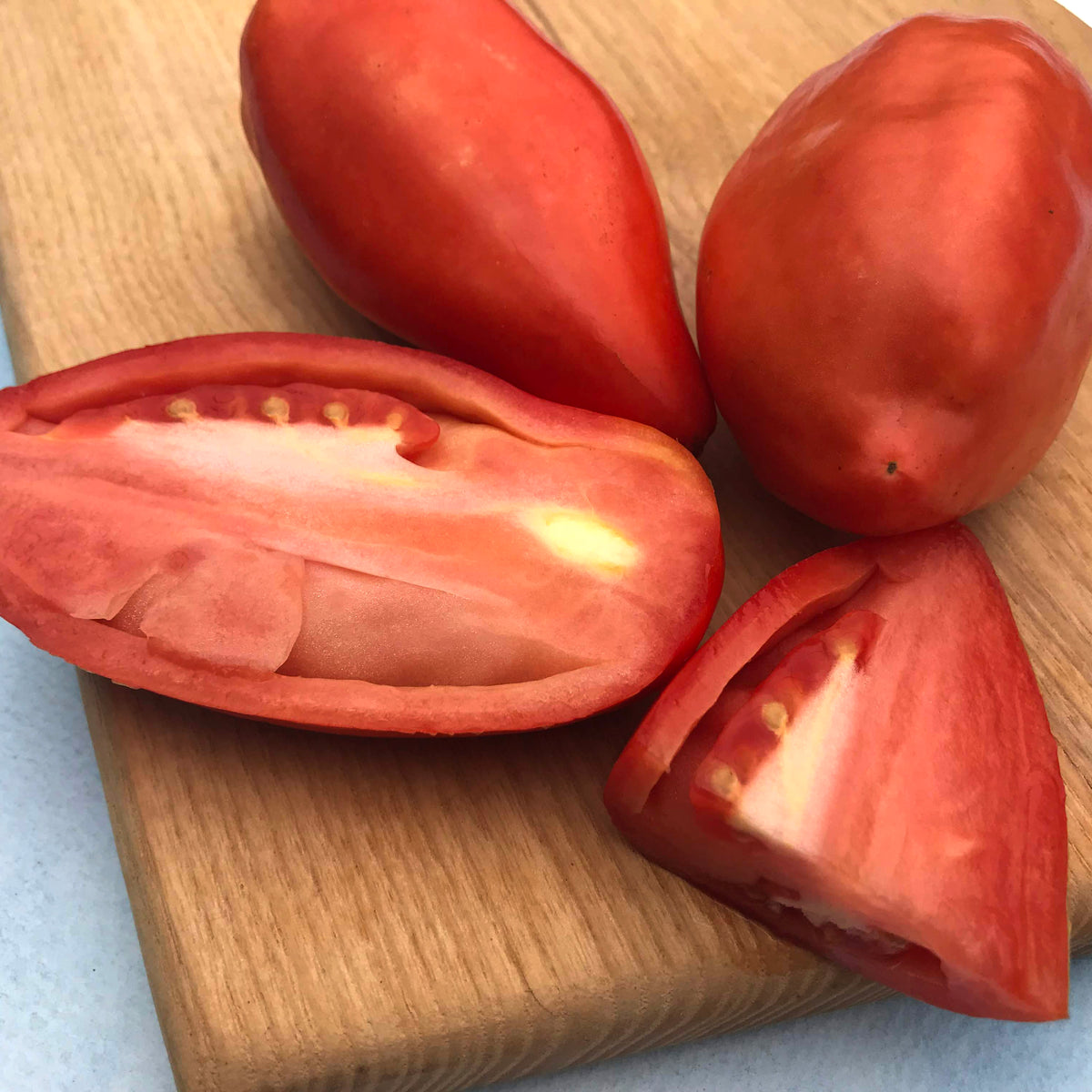
Blue Beech Tomato
Solanum lycopersicum
Certified Organic
This long sauce tomato is earning a reputation around the north for it's great flavor, low seed count and thick saucing capabilities. It's what we call a "solid" tomato, when you slice into it, there are no spaces and water does not come dripping out, and yet, it has an incredible flavor that improves in the sauce pot. Stew, sauce and can them; slice, roast and freeze them; chop, toss and eat them--Blue Beech will be a favorite year-round. The vines set a lot of green fruit that ripen later in the season, be patient. Indeterminate. 90 days.
Ships within 2-3 business days
Couldn't load pickup availability
Growing instructions
Tomatoes are the quintessential summer vegetable, and they're much easier to grow from seed than many people think. They must be started early, of course, but once they're up and running they're a cinch: just give them a spot with plenty of sun, as even moisture as you can manage, and sturdy stakes or cages to keep the viney plants from tumbling in violent summer storms.
Sow tomato seeds anytime from mid March to late April; the earlier you sow the seeds, the earlier you'll harvest fruit. Sowing tomato seeds after the first of May is not likely to produce plants that yield before frost; if you have a greenhouse, though, a late sowing will give you healthier plants for the fall crop. Sow the seeds about a quarter-inch deep in soil blocks or pots. Some people prefer to transplant the crop once into larger pots before transplanting to the field. This usually gets you fruit the earliest, but it's not necessary if you fail to do it--especially if you use soil blocks, in which case the plant will wait until you are ready without becoming root-bound.
In our experience, tomato seedlings do fine in a cold frame. They require less coddling than peppers or eggplant and will handle the cool nights just fine. Just be sure not to overwater, as young tomatoes in a consistently wet planting medium are quite susceptible to damping off.
Tomatoes can be planted out around mid-May if you have row cover handy to protect your crop from late frosts; otherwise it's usually smartest to wait until the third or fourth week of the month. Space the plants 18-30" apart depending on the size of the variety. Sink the plant into the ground until the lowest set of leaves is just above ground level; roots will form from the "hairy" stems. Cage or stake when the plants reach a foot high.
Determinate plants such as New Yorker benefit from staking or caging but needn't be pruned. Most people do prune the indeterminate plants, focusing on removing the shoots that form in the "crotch" of each horizontal branch of the plant; others just let the plants grow like mad.
Most people avoid mulching tomatoes for at least the first month of the plant's life, so as to allow the sun to heat up the soil quickly. In late June, mulching and removing lower leaves may help protect against the infectious splatter that induces blight in damp, cool seasons. If it is a blighty year, all is not lost: just stay on top of harvesting and you'll get plenty of usable fruit. Planting a second round of seedlings in mid- to late-April and transplanting them to a separate area of the garden can be an insurance policy during a challenging season: the different set of conditions experienced by these later seedlings can sometimes provide better yields.
Product Details
| Days to Maturity | 90 days from transplant |
|---|---|
| Days to Germination | 5 to 10 days |
| Height at Maturity | 72 inches |
| Sun Conditions | Full Sun (8+ Hours Sun) |
| Planting Depth | 1/2" |
| Row Spacing | 36 inches |
| Plant Spacing | 24 inches |
-
Hurry, only 19 items left in stock!